


Echo of Feminism
“I am not free while any other woman is unfree, even when her shackles are very different from my own.”- Audre Lorde

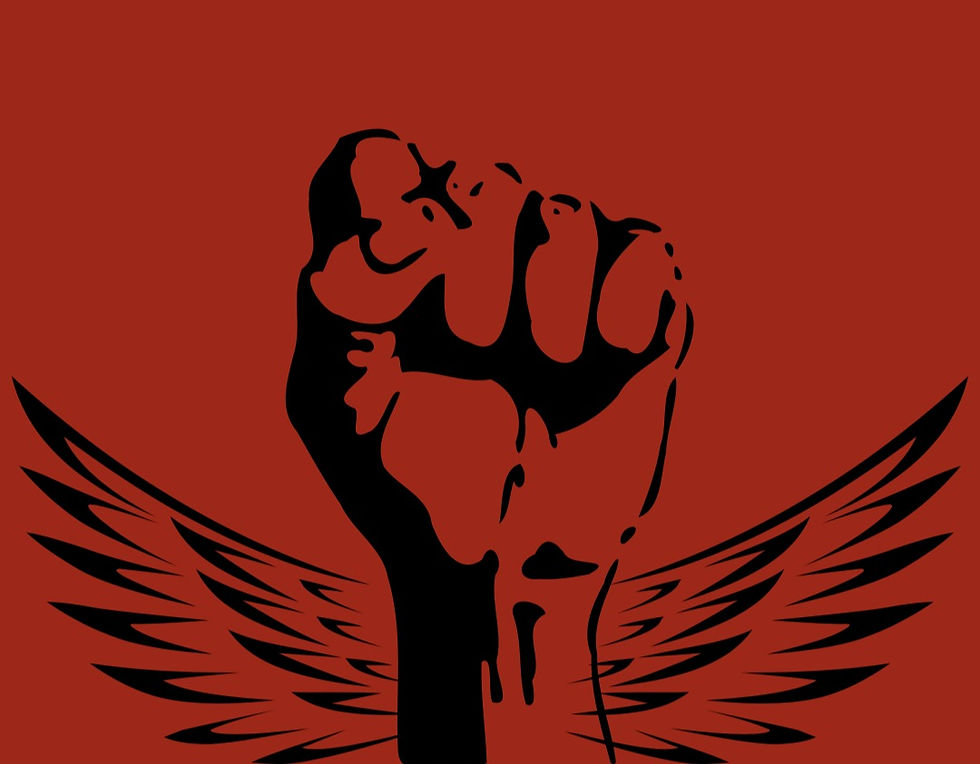
Artwork by Ishita Paul
Since childhood, I have seen women work endlessly to make ends meet one way or the other. The male members of the household are traditionally and conventionally termed as the sole “bread-makers” of the family. “Are women equally capable?” was one question I kept asking everyone around me.
Almost a decade, and this question still lingers around the quiet and dark streets of rural areas where women feel they are not as capable as the men in their families. Not only this, women in general – all over the world – are taught to be “quiet,” “well-mannered,” “submissive,” every time they try to be expressive. To put my question plainly, is this what equality of genders mean?
Feminism has been among the many discussions that has never ended in a satisfactory resolution. Being a feminist in today’s world not only calls for abundant criticism, but is also a benchmark of how “modern” or “progressive” an individual is. Feminism has evolved significantly over the years. It started off as a mere movement and has continued to evolve every day.
Feminism, for most of its course, has been multicultural and pretty diasporic. It not only resides in the West. Instead, it has been monolithic in many respects. The Indian context with regard to Feminism has been evolving since the beginning of time. It would be far wrong to compare Indian feminism with the Western, which is marked by radical standards, in such a complex setting, and to invoke Western feminist critics on the problems faced by women in India.
Jasbir Jain, the author of Indigenous Roots of Feminism, has examined a number of Indian historical texts with respect to Feminism. She says “Draupadi deconstructed the notions of chastity and sati; Sita, of power and motherhood; Kali, of violence; Puru's young wife, of sexuality; the bhakta women, of marriage and prayer.” Jasbir believes that “feminism is more than a voice of protest or questioning. It is moral self-reflection.”
In today’s modern and progressive world, Feminism has not only been every young student’s major topic of debate, but it has also taken a backseat every time criticism has stopped being constructive. Feminism is often associated with a movement that’s based on the superiority of women over that of men. Often, and not surprisingly so, it’s confused with misandry. In a world that’s continuously rambling about the increasing number of women entrepreneurs, being a feminist can be nothing less than a task. Catering to all these misconceptions about feminism, people have also come up with “Feminazis” wherein they imply that being a feminist is not less than being a Nazi.
Indian women have risen above every stereotype about working women. Not only do they have respectable jobs, they also have been actively engaging in Indian politics. For instance, Devendra Fadnavis, Maharashtra’s 18th Chief Minister had modelled for a garment shop in Nagpur for about eight years. The fact that women don’t have the persistence and the will to take up serious jobs and that they are meant for things concerning with fashion and beauty has been proven wrong at every step so far.
Why is feminism needed?
Feminism, in totality, does not advocate the superiority of women over men. Instead, it yearns for equal rights of both the sexes. One of the questions that usually pop up every time feminism is talked about is why it’s still needed if women already have the “basic rights” such as voting etc. Feminism is needed not because women don’t have rights, it’s needed because the existing patriarchal pattern of the society has not ceased to exist yet. It’s not uncommon to stumble upon the subject of “feminism” during the very elaborate dinner parties in Indian households. India requires feminism because, whether it be her father, brother, husband or son, a woman should not be considered a male liability throughout her life. The degree of male superiority is highlighted by activities like 'kanyadaan',' Raksha Bandhan' and the 'purdah method' where a woman is veiled behind a ghoonghat.
Feminism's media representation leads to its stigmatized image. Both traditional and social media can be credited with this. The Feminist has been painted by the media as an angry, man-hating woman. Women face tremendous sexism worldwide in the workplace as well.
On the brighter side, however, through a number of measures, feminism has proven to be instrumental in society. Voting rights were gained for women in many countries around the world through this movement, as was greater access to education and an increased degree of bodily autonomy. Latest campaigns such as #MeToo have taken the debate to the mainstream around sexual harassment and abuse, serving not only the entertainment industry, but other sectors worldwide as a wake-up call. In exchange, this has led to concrete changes in the form of social and political change in many workplaces.
“Expanded attention on intersectional feminism, in addition, has increased the inclusivity of the movement, taking into account imperative factors such as race, religion, sexuality, and caste.”
Audre Lorde said, “I am not free while any other woman is unfree, even when her shackles are very different from my own.” Reflecting on this quote, I would just like to conclude by saying that there are still so many women all around the globe that do not enjoy the same privileges as men. Patriarchy still exists and breeds in such societies. Being a feminist might be a choice, but it’s also the need of the hour. It’s a long journey, but it’s not an endless one.
Article by: Salonii Khemani


Comments